
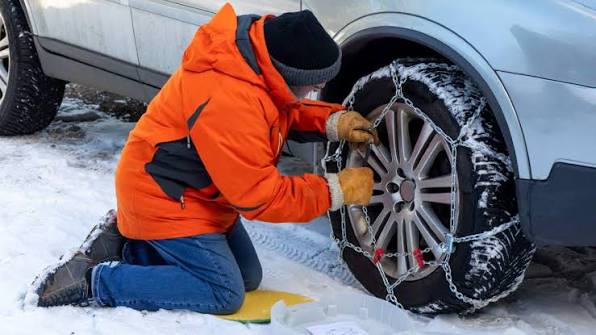
Snow changes the basic relationship between your vehicle, the road, and every driving decision you make. Reduced traction means acceleration, steering, and braking may take more time and distance than they would on dry pavement.
Proper tires help, but safe snow driving also depends on lower speeds, greater spacing, gentle control inputs, and knowing when conditions are too poor to continue.
Prepare the Vehicle Before Snow Arrives
Winter preparation is easier before roads become covered. Check lights, wipers, washer fluid, battery condition, heating, defrosting, and other basic systems that affect visibility and reliability.
Thoughtful winter vehicle preparation can reduce avoidable roadside problems during cold weather. Carrying basic winter supplies may also help if a delay leaves you stopped longer than expected.
Clear the Whole Vehicle
Remove snow from windows, mirrors, lights, roof surfaces, and other areas that could affect visibility. Driving with only a small opening cleared from the windshield severely restricts awareness.
Loose snow from the roof can also move while driving and create visibility problems.
Use More Distance Than Usual
Snow and ice can reduce grip dramatically. A following distance that feels generous on dry pavement may become insufficient when braking traction is limited.
Good cold-weather route preparation includes checking whether steep grades, untreated side roads, exposed bridges, or isolated areas can be avoided. Choosing a slightly longer but easier route can sometimes reduce difficult braking and climbing situations.
| Winter Condition | Main Difficulty | Driving Adjustment |
|---|---|---|
| Packed snow | Reduced grip | Increase distance |
| Icy patches | Sudden traction loss | Avoid abrupt inputs |
| Falling snow | Lower visibility | Reduce speed |
| Steep grades | Harder acceleration/braking | Plan route carefully |
Choose Tires for Winter Conditions
Tire performance becomes more noticeable when temperatures fall and roads are covered. Drivers in areas with regular winter weather should use tires appropriate for the conditions and local requirements.
Regular winter tire readiness includes checking tread, pressure, and general condition throughout the season. Tires should be inspected before severe weather rather than after poor traction has already become obvious.
Accelerate, Brake, and Turn Gently
Abrupt control inputs can overwhelm available grip. Apply the accelerator gradually, begin slowing earlier, and steer smoothly through curves.
If the vehicle begins sliding, avoid panic movements. Sudden braking or aggressive steering may make the situation harder to control. Focus on reducing abrupt inputs and regaining stable movement.
Watch Bridges and Shaded Areas
Some surfaces may become slippery before surrounding pavement does. Bridges, overpasses, shaded areas, and untreated roads deserve added caution when temperatures are low.
Do not assume a road is consistently safe simply because the last few miles felt normal.
Where Winter Confidence Goes Wrong
Four-wheel drive and all-wheel drive can improve the ability to move on slippery surfaces, but they do not eliminate braking limits. A vehicle that accelerates confidently can still require substantial distance to stop.
Another mistake is relying entirely on other drivers’ speed as a guide. Traffic may be moving faster than conditions safely allow. Make decisions based on visibility, traction, road treatment, and your ability to maintain control rather than matching the fastest vehicle nearby.
Frequently Asked Questions
Are winter tires useful even without deep snow?
They can be useful in cold conditions depending on tire design and local weather. Drivers should select tires appropriate for their climate, vehicle, driving needs, and applicable local requirements.
Should I use cruise control on snowy roads?
Cruise control is generally better avoided when traction is inconsistent or frequent speed adjustments are needed. Maintaining direct control of acceleration can help you respond more smoothly to changing road conditions.
What should I do if snowfall becomes too heavy to see clearly?
Reduce speed and look for a safe place to stop if visibility becomes inadequate. Do not stop in an active travel lane unless an emergency leaves no safer alternative.
Treat Snow as a Different Driving Environment
Snow driving becomes safer when you stop expecting the vehicle to behave as it does on dry pavement. Prepare before winter weather, use suitable tires, increase following distance, and make every control input more gradual. If visibility or traction becomes too poor, changing the route or delaying the trip may be the safest decision available.