
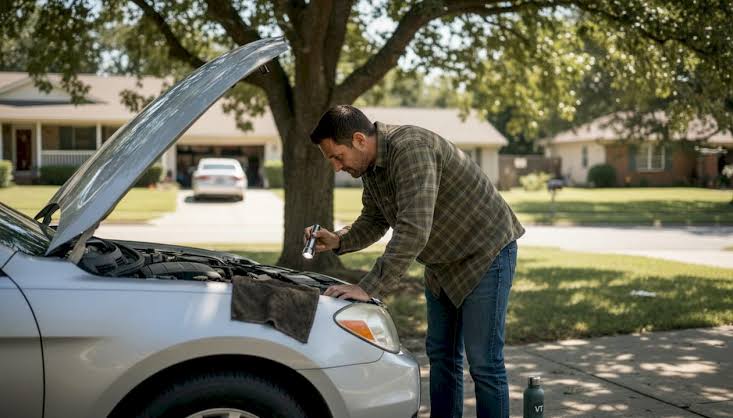
An accident on a vehicle-history report does not automatically mean a used car should be rejected. Minor cosmetic damage and major structural repairs can both appear under the broad label of accident history.
Your job is to determine what was damaged, how it was repaired, and whether the car now drives, aligns, and functions as it should.
Start With the History, Then Verify It
A history report is useful, but it should be treated as one source of information rather than a complete mechanical diagnosis. Records may describe an accident without showing the full repair process.
Ask the seller for repair invoices, photographs, insurance documents, body-shop records, and details about replaced parts whenever they are available.
Reviewing broader vehicle inspection topics may help you prepare questions, but documentation tied to the actual car provides much stronger evidence about what happened.
Examine Paint and Body Alignment
Look at panel gaps around the hood, doors, trunk, bumpers, and fenders. Uneven spacing does not prove serious damage, but it can justify closer examination.
Check for noticeable differences in paint shade or texture, overspray on trim, missing fasteners, unusual welds, and inconsistent seam sealer. The underside of the vehicle may also reveal repair work that is difficult to see from above.
General road and car ownership guidance can supplement your checklist, while physical evidence should guide the inspection itself.
| Clue | What It May Suggest | Next Step |
|---|---|---|
| Uneven panel gaps | Previous body repair | Inspect surrounding structure |
| Different paint shade | Refinished panel | Ask what damage occurred |
| Irregular tire wear | Alignment or suspension issue | Request alignment inspection |
| Warning lights | Electronic or restraint concern | Run diagnostic checks |
Test the Car Beyond a Short Parking-Lot Drive
Drive at different speeds when conditions allow. Pay attention to steering-center position, vibration, braking behavior, wind noise, warning lights, suspension sounds, and whether the vehicle tracks straight.
A car that constantly pulls may have something as simple as tire or alignment trouble, but previous collision damage makes the issue worth investigating carefully.
People reading car maintenance material may know what symptoms to notice, yet a qualified independent technician can assess whether those symptoms connect to previous repairs.
Do Not Assume Repaired Means Fully Restored
A vehicle can look excellent while still having unresolved problems behind panels or underneath the body. Wiring, sensors, air-conditioning components, suspension pieces, safety systems, and corrosion protection may all be affected by a collision.
Another mistake is treating every accident equally. A bumper replacement after a low-speed incident is different from major damage involving structural areas or multiple mechanical systems.
The location, severity, and repair quality matter more than the simple presence of the word “accident” on a report.
Arrange an Independent Inspection
Tell the technician that the car has known accident history so the inspection can focus on relevant areas. If significant body or structural repairs are suspected, a specialist familiar with collision work may provide useful additional insight.
Ask whether tire wear, alignment readings, underbody condition, welds, suspension geometry, diagnostic codes, and restraint-system indicators appear normal.
Use any identified problems when deciding whether to continue negotiating, lower your offer, request repairs, or choose another vehicle.
Frequently Asked Questions
Should I avoid every car that has been in an accident?
Not necessarily. The severity of the damage, repair quality, current condition, documentation, price, and inspection results are more informative than accident history alone.
Can a vehicle-history report show every accident?
Not always. Reporting depends on what information reaches the databases involved, so buyers should combine history reports with inspection, records, seller questions, and a test drive.
Does accident history reduce resale value?
It can. Future buyers may compare the vehicle with similar examples that have no reported accidents, which can affect demand and resale negotiations.
Let the Repair Quality Decide
Accident history should lead to more investigation, not an automatic yes or no. Identify what happened, inspect the repair area, test the vehicle thoroughly, and have an independent professional look for problems that are easy to miss.
A properly repaired car may still provide years of useful service. The bigger risk is buying one without understanding the extent and quality of the work already performed.